Last updated November 22, 2026
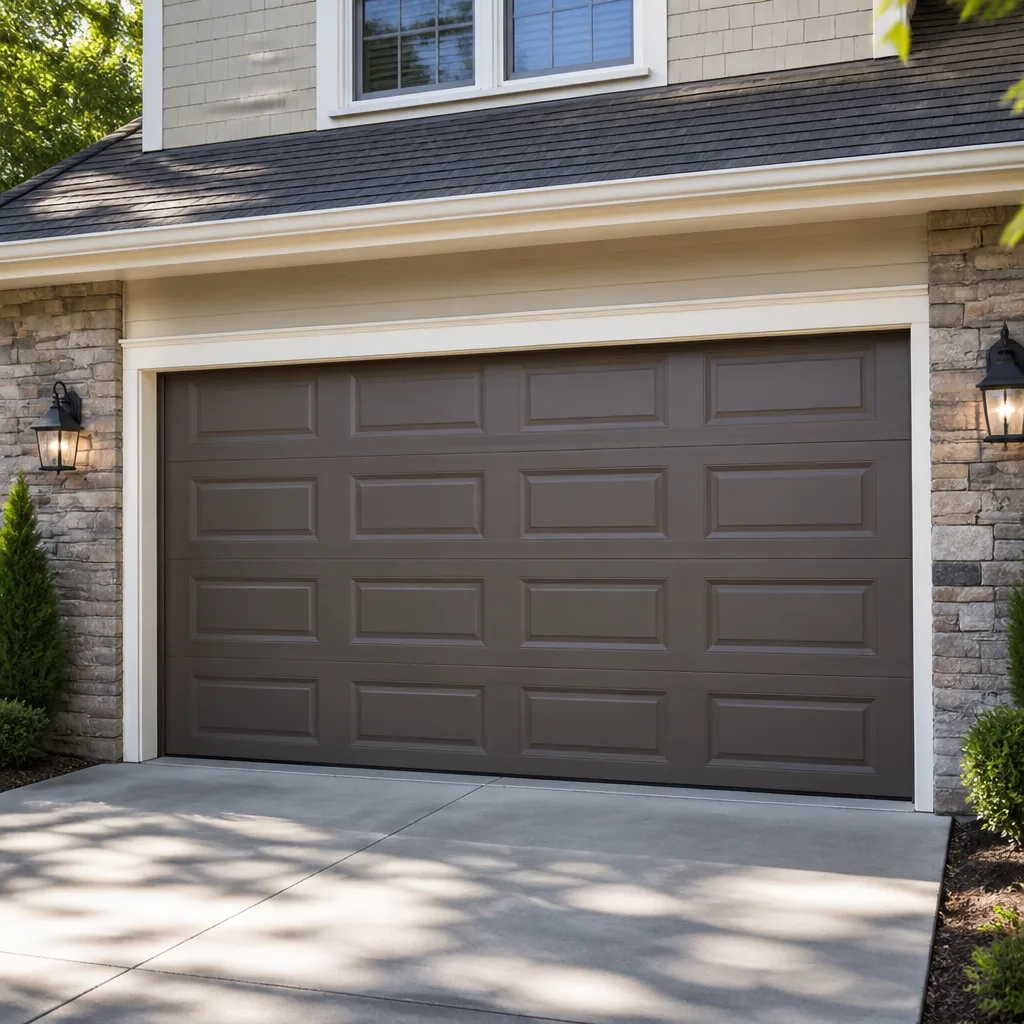 Raised-panel steel
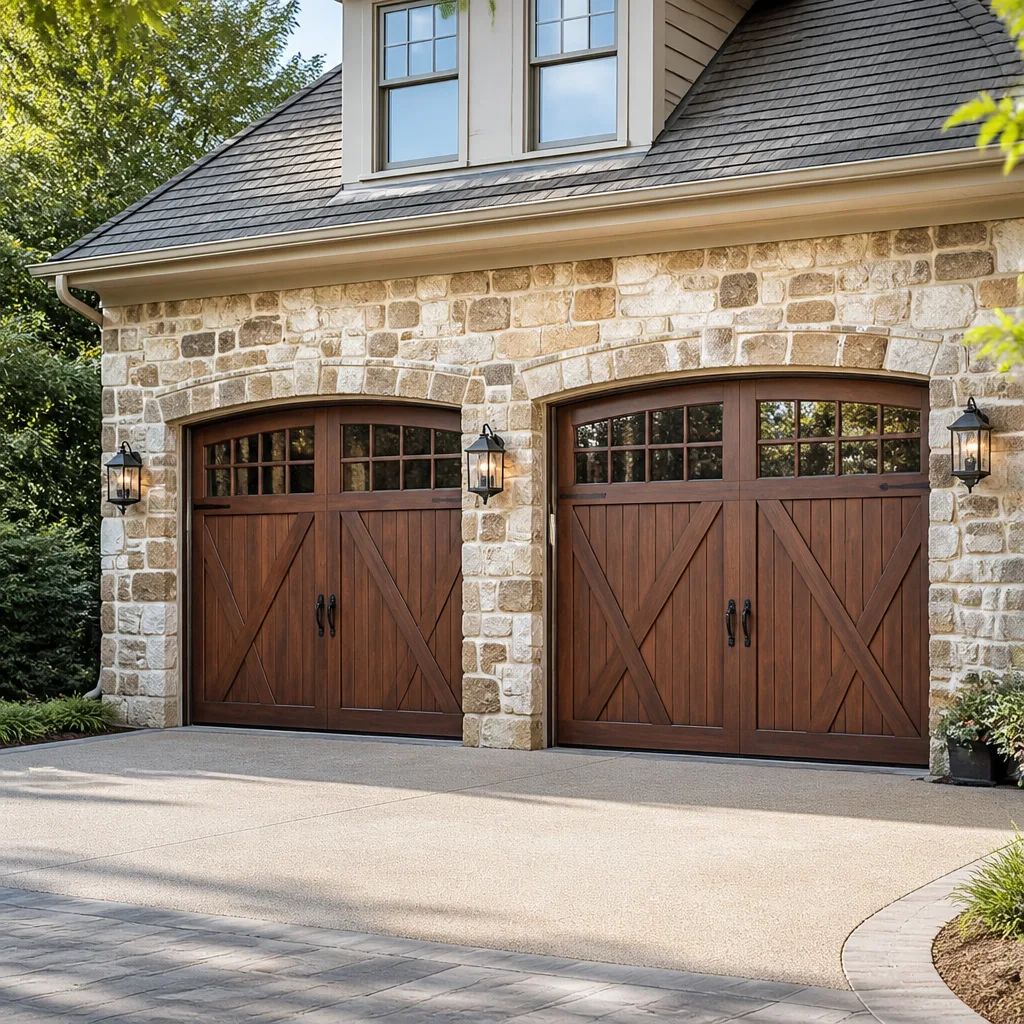 Carriage house
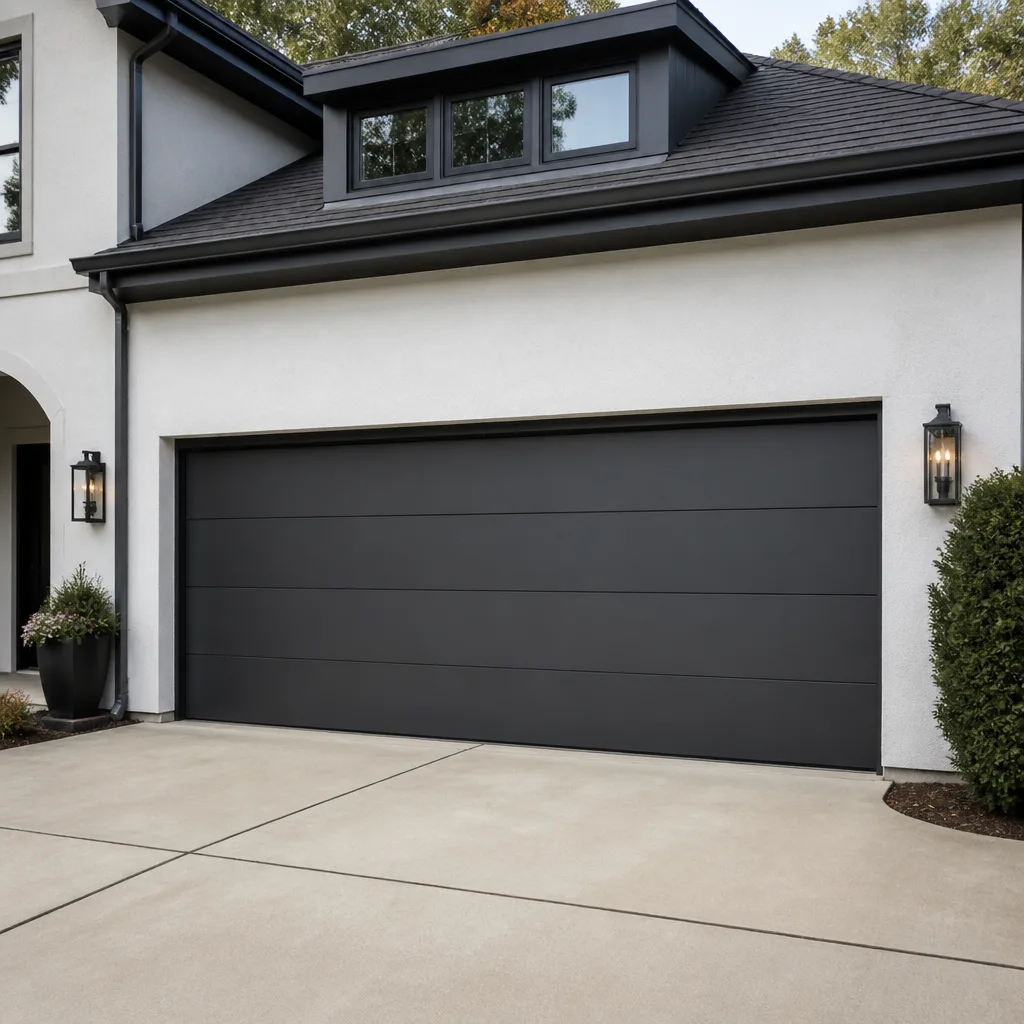 Modern flush
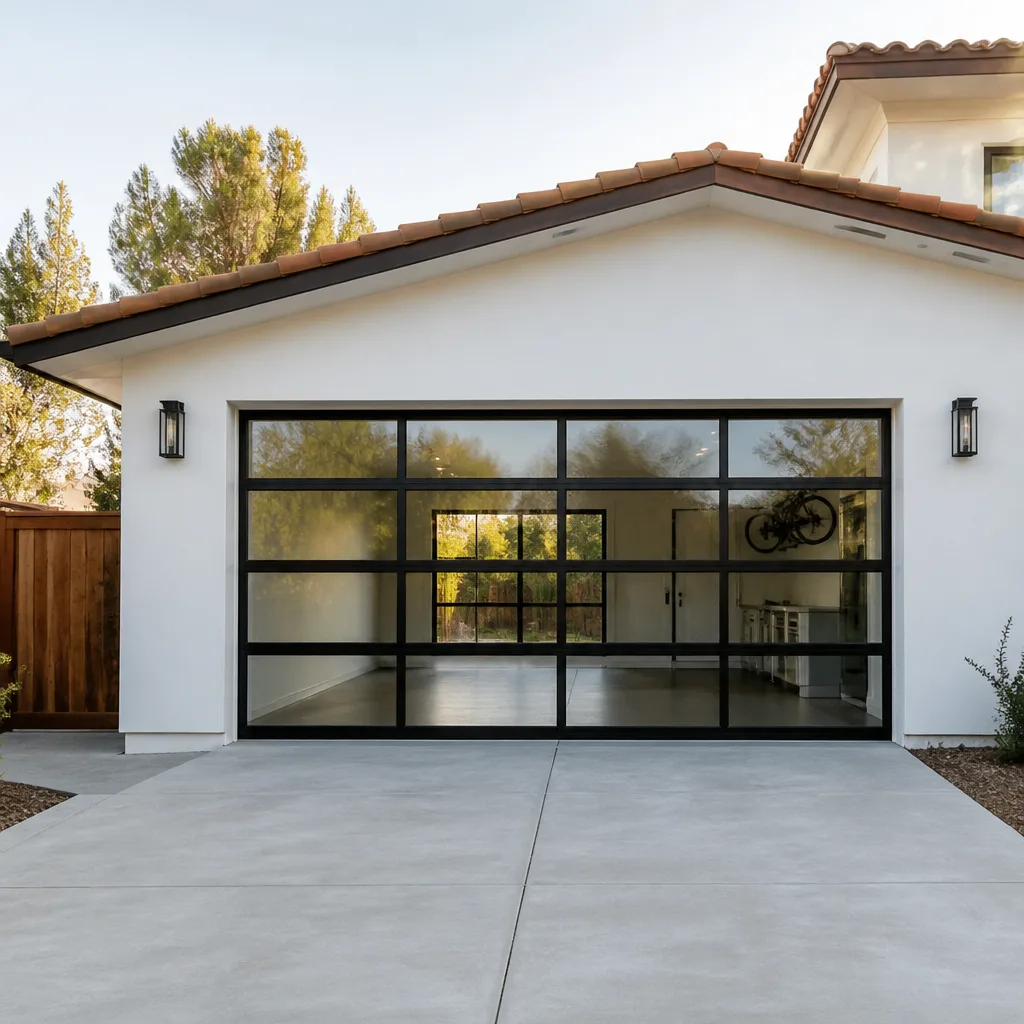 Full-view glass
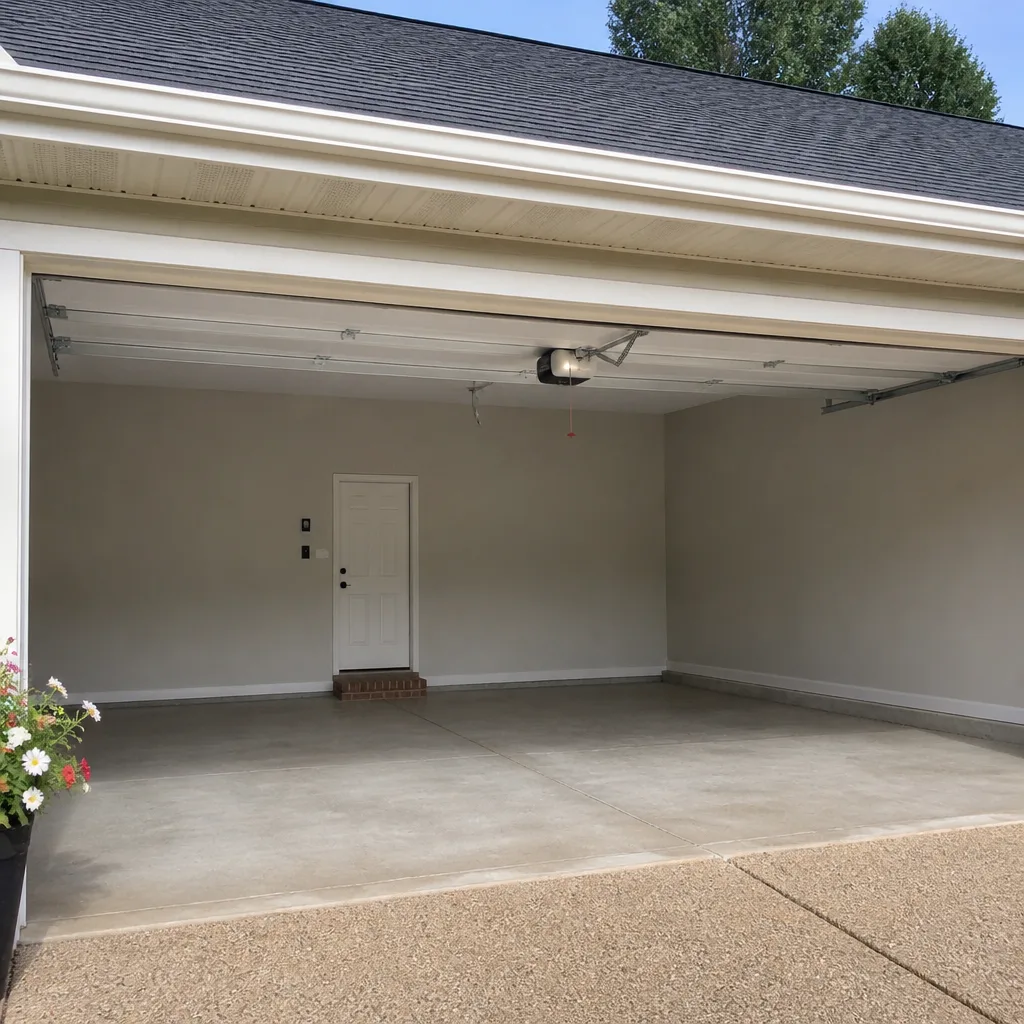 LiftMaster openers
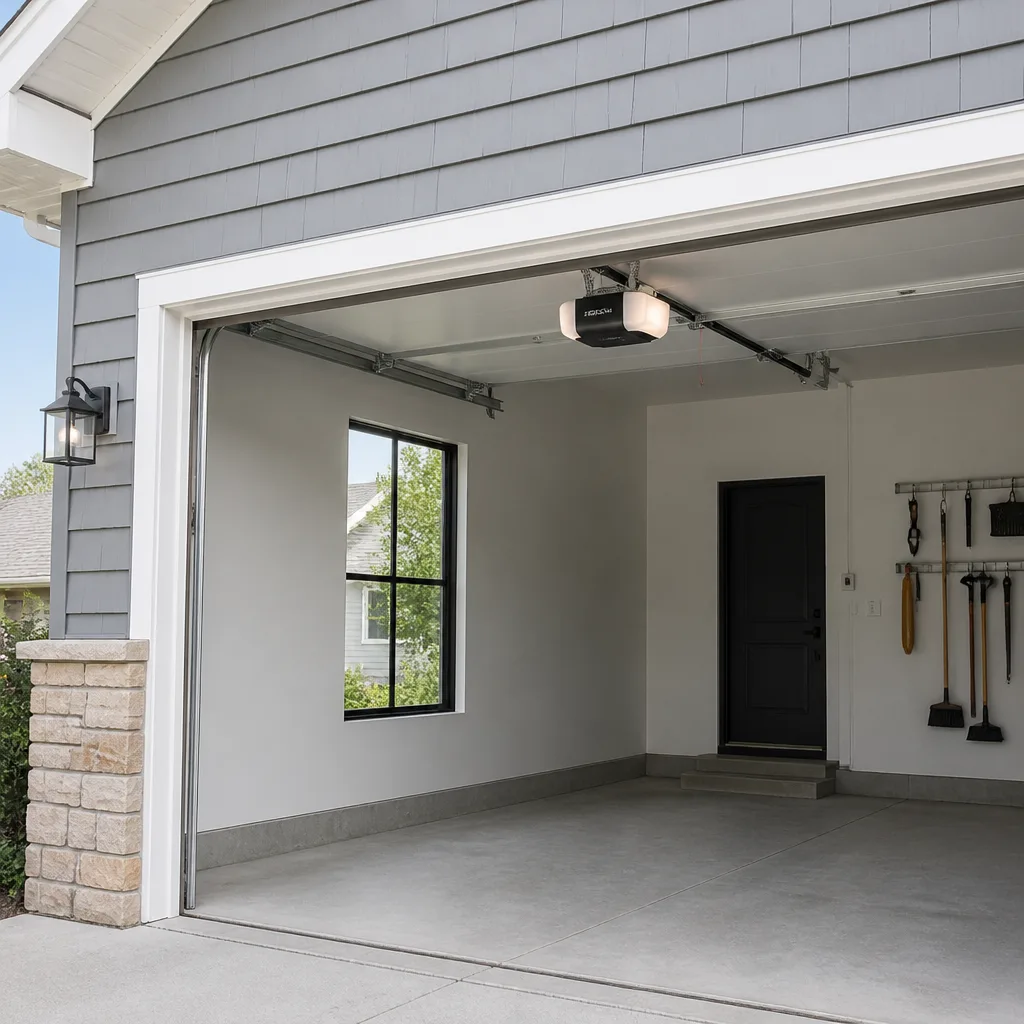 Chamberlain openers
Full 25-point door and opener safety check with every visit - springs, cables, rollers, tracks, and your LiftMaster or Chamberlain opener included
You get a price before we start. It does not change when the pro arrives.
Get your free estimateGarage Door Emergency Preparedness Guide for Toms River Homes
The failure that catches most Toms River homeowners off guard isn’t a bent panel or a snapped spring. It’s a dead opener during a power outage with the car stuck inside. The door is fine. The motor is fine. The problem is that nobody ever learned where the manual release cord is or how to pull it without hurting themselves or wedging the carriage back into gear. Storms here knock out power often enough that this is worth rehearsing once, calmly, before you need it. Below you’ll find the pre-storm checklist, the manual release walkthrough for LiftMaster, Chamberlain and Genie openers, a post-storm inspection sequence, and a realistic plan for getting help after a regional storm when every garage door company in Ocean County is booked solid. Bookmark it and read it before the next watch or warning.
Quick Answer
A storm-ready garage door in Toms River means three things: you know how to release the door manually from inside the garage, your opener is unplugged or on surge protection before a named storm arrives, and you know the post-storm order to check things in before you press the remote again. If the door is already stuck, sprung or hanging, stop using the opener and call a specialist. A door held up by a broken torsion spring is dead weight, and forcing it is how people get hurt.
Styles & brands we work with
- Raised-panel steel
- Carriage house
- Modern flush
- Full-view glass
- LiftMaster openers
- Chamberlain openers
Table of Contents
- Why Garage Doors Fail During Ocean County Storms
- The Pre-Storm Checklist for Toms River Homes
- How to Release Your Garage Door Manually (LiftMaster, Chamberlain, Genie)
- Garage Doors in AE Flood Zones: What FEMA and NJ DEP Guidance Says
- The Post-Storm Inspection Sequence
- Getting Emergency Garage Door Service After a Regional Storm
- When to Call a Professional
- Frequently Asked Questions
Why Garage Doors Fail During Ocean County Storms
Ocean County sees an average of three named storms per season. Most of them don’t take a door off its tracks. What they do is cut power, drive water under the bottom seal, and shake the whole assembly hard enough to expose a part that was already tired. In our experience the failures split into a few predictable categories, and only one of them is actual wind damage.
The bigger list looks like this:
- Power loss trapping cars. An opener with no battery backup is a locked door. If nobody in the house knows the manual release procedure, the car stays put until the grid comes back.
- Phantom activation from surges. When power flickers back on, a surge can trigger the opener to cycle the door on its own. If the door is already stressed or something is sitting in its path, that cycle does damage.
- Spring and cable fatigue. Torsion springs and lift cables take the load every time the door moves. Vibration from sustained wind works on the same components. A spring that was near the end of its life in August tends to let go in the middle of a rough night.
- Water at the threshold. A worn bottom seal lets water into the garage during heavy rain. Once the floor is wet, the door’s rollers and bottom brackets sit in it.
- Track misalignment. Debris striking the door, or the door slamming against a bound track during a power flicker, bends the rails just enough that the rollers bind.
None of this is exotic. It’s ordinary mechanical wear meeting an event that stresses the whole system at once. The homeowners who come through a storm with a working door are usually the ones who checked the seal, the springs and the manual release in the quiet week before. If your door is already showing symptoms, a Toms River Garage Door Repair Co technician can look at it before the season turns.
The Pre-Storm Checklist for Toms River Homes
The window to prepare is the two or three days between a storm being named and it arriving. That’s enough time to do everything below without rushing. Work through it in order.
- Close and secure the door in the down position. A door that’s fully closed and latched is far more wind-resistant than one left partway up. Don’t block it open expecting to move cars later; move the cars first, then close it.
- Disconnect the opener from the door. Pull the manual release so the carriage is disengaged and the door is not coupled to the motor. This prevents the opener from cycling the door on a power surge or a phantom signal while you’re not watching. Remember that a disconnected door is now on its own springs, so it must be balanced and in good shape to hold.
- Unplug the opener or protect it. Kill power to the opener at the outlet or the breaker so a surge has nothing to feed. If you use a plug-in surge protector, make sure it’s rated for motor loads, not just a cheap strip.
- Check the bottom seal. Run a hand along the rubber where it meets the floor. A seal that’s cracked, flat or torn lets water in during heavy rain. Replacing a bottom seal is a small job now and a wet garage later if you skip it.
- Inspect springs and cables with your eyes only. Look at the torsion spring above the door for a visible gap in the coil. Look at the cables for fraying or slack. Don’t touch them and don’t try to adjust anything. If something looks wrong, that’s a professional job before the storm, not after.
- Clear the door’s path. Move anything stored near the tracks, the bottom brackets or the photo-eye sensors. Storms make people shove things into the garage; make sure nothing ends up leaning against the door.
- Locate and test the manual release. Pull the red cord with the door closed and the opener disengaged, confirm the carriage releases, then re-engage it and run the opener once to check it behaves. Do this in calm weather so nobody is learning it in the dark.
If any step turns up a problem you can’t solve with a visual check, it’s worth a call before the storm rather than after. Our technicians have up to 14 years of experience with the openers and springs in Toms River homes, and a balanced door with healthy springs is the single biggest factor in whether it rides out a storm.
How to Release Your Garage Door Manually (LiftMaster, Chamberlain, Genie)
Every residential trolley opener has a manual release, and on the three most common brands it works the same way in principle: a red cord hanging from the carriage disengages the door from the motor so you can lift it by hand. The trick isn’t the pull. It’s understanding what the door does after you pull, and how to avoid the mistake that re-engages the carriage while the door is halfway up.
Here’s the sequence, and it’s the same for LiftMaster, Chamberlain and Genie units in most Toms River garages:
- Make sure the door is fully closed first. Pulling the release with the door partway up drops it. Closed is the safe starting point.
- Find the red cord. It hangs from the trolley carriage on the rail above the door. If yours has been cut short or tied up out of reach, that’s a pre-storm fix, not a mid-storm discovery.
- Pull straight down and hold briefly. You’ll hear or feel the carriage release. The door is now disconnected from the opener.
- Lift the door slowly by hand. A properly balanced door should lift with one hand and stay wherever you leave it. If it’s heavy or slams down, the springs are weak or broken and you should not lift it. That’s a hard stop.
- Walk the door up, don’t yank. Use the handle or the bottom section, keep your fingers away from the hinges and the space between sections.
- Re-engage the carriage with the door fully closed. This is the mistake that trips people up. If you close the door and then walk the carriage back into the opener’s engage point while the door is still moving, or you press the opener before the carriage is seated, the trolley can catch mid-travel and bend the rail or snap the arm. Run the opener once with nothing near it to confirm the carriage re-seated cleanly.
For anything more involved than a manual release, like an opener whose logic board won’t respond after a surge, the garage door opener repair specialists can diagnose the unit rather than guess. We service LiftMaster, Chamberlain, Genie, Clopay, Amarr, Wayne Dalton, Craftsman and Raynor equipment, so there’s no “we don’t work on that brand” conversation. If you’d rather not test your release in the rain, we can walk a Toms River homeowner through it.
Garage Doors in AE Flood Zones: What FEMA and NJ DEP Guidance Says
Parts of Toms River sit in FEMA AE flood zones, and that changes the garage door conversation. In an AE zone, the concern isn’t just water getting in. It’s water pressure against the structure during a surge event, and FEMA and NJ DEP guidance addresses that in a specific way: openings that are meant to let water in and out, or that are left able to equalize pressure, protect the structure from being pushed off its foundation. A garage door that’s sealed tight against a rising surge can become the pressure point.
What that means practically, for a homeowner in an AE zone:
- Understand your flood elevation. If you’re not sure where your garage floor sits relative to the base flood elevation, that’s worth knowing before storm season, not during. Your local building department or floodplain administrator can tell you how your property is mapped.
- Follow floodplain guidance on leaving the door able to equalize. In some AE zone homes the guidance is that a garage door should not be locked down during a surge event, so water can move in and out rather than press against the walls. Check with your municipality’s floodplain administrator on what applies to your specific structure. Don’t guess.
- Don’t treat the garage as dry storage during a flood watch. Anything on the floor in an AE zone garage is in the water’s path. Move it up and out before a surge, not after.
- Evacuate when told to. None of this substitutes for a mandatory evacuation order. If officials say leave, leave. A garage door protocol is for the times you’re staying, not a reason to stay.
If a storm has flooded your garage and you’re wondering whether the door and opener survived it, that’s a call for a professional inspection before you run the opener. Motors, logic boards and photo-eyes don’t like water, and a door that looks fine can bind on a swollen track on the first cycle.
The Post-Storm Inspection Sequence
Once the storm has passed, resist the urge to hit the remote and call it good. Run this sequence first. It takes a few minutes and it catches the problems that turn into bigger ones on the first real use.
- Visual pass before power. With the opener still unplugged, look at the door from inside. Is it sitting square in the opening? Are any panels bent, is the bottom seal torn, is anything leaning near the tracks?
- Track alignment. Look down each vertical track and the horizontal rail. Both should run straight and parallel with even gaps on both sides. A bent track, even a small one, will bind a roller and burn out the opener if you run it anyway.
- Spring visual for coil separation. Look at the torsion spring above the door for a gap in the coil. Sustained vibration can cause the coil to separate. Also check the extension springs if you have them. Don’t touch, don’t adjust, just look. A separated spring means the door is unsupported.
- Cable condition. Look for fraying, kinks, or slack in the lift cables on both sides. Cables under tension are dangerous to handle. If one looks wrong, stop.
- Sensor check. Reconnect power, then check that the photo-eye sensors on both sides of the door have a steady light. Wave a hand through the beam and confirm the door reverses when it should. If the sensors are misaligned from debris or a bump, the opener will refuse to close the door.
- Run the door once, slowly, and watch it. With nothing in the way, cycle it. Listen for grinding, watch for hesitation, check that it reverses on contact. If anything sounds off or the door travels unevenly, stop and get it looked at.
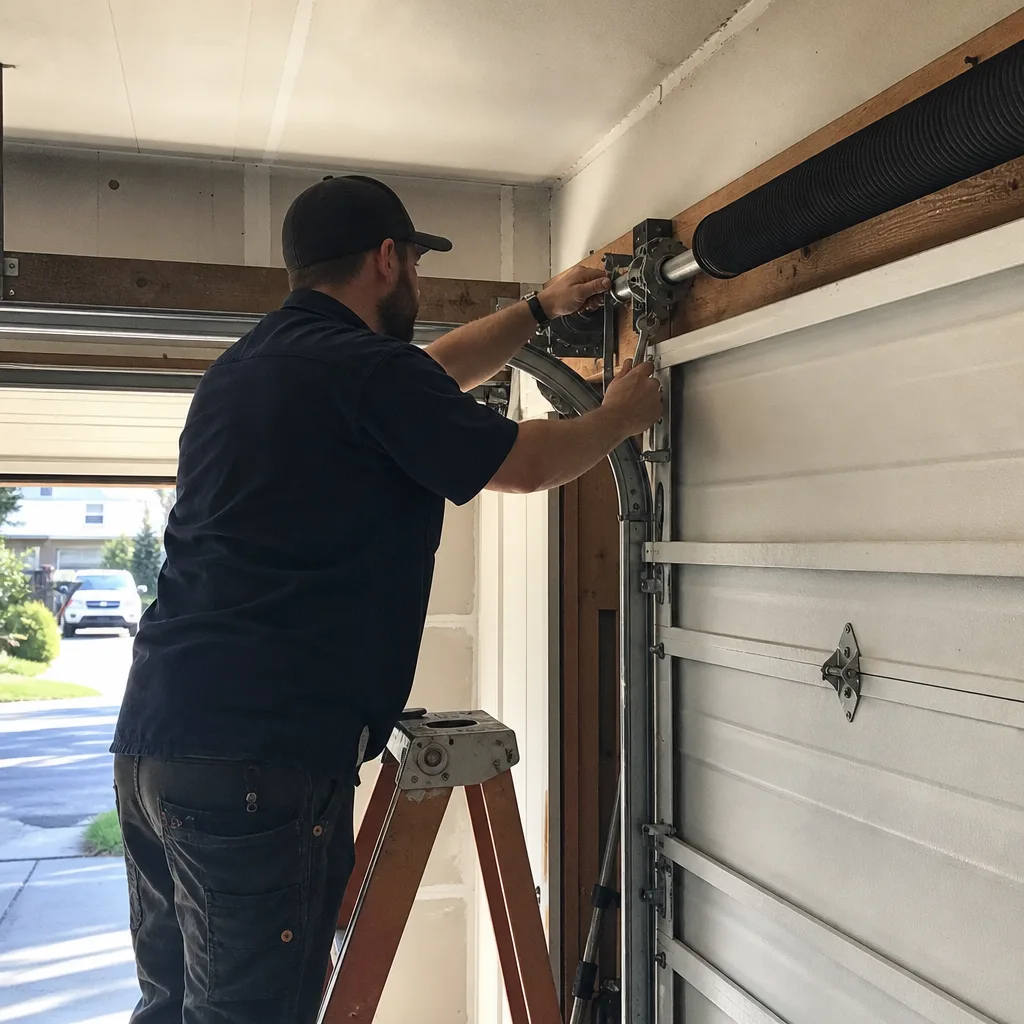
If the springs survived but the door sounds rough, a garage door spring repair visit will confirm whether it’s the spring, the rollers or the opener. Springs and cables are the parts we never tell a homeowner to handle. The stored energy in a wound torsion spring can release without warning, and it’s the part of garage door work that injures people who try it at home.
Getting Emergency Garage Door Service After a Regional Storm
After a regional storm, every garage door company in Ocean County has a backlog, and it’s not unusual for that backlog to run 48 hours or more when a broad swath of homes needs help at once. That’s why the work you do before the storm matters. But if the door fails anyway, here’s how to get service prioritized rather than sitting in a voicemail queue.
- Call, don’t email. A phone call gets you on a list and lets you describe the problem in real time. An email after a storm sits in an inbox behind a hundred others.
- Lead with whether the home is unsecured or a car is trapped. Those are the situations that get scheduled first. If the door won’t close and the garage is open to the street, that’s a priority.
- Know what’s broken before you call. “A spring is broken, I can see the gap in the coil and the door is dead weight” gets you a faster, more accurate appointment than “the door won’t work.”
- Don’t run the opener while you wait. If the door is binding or a spring is broken, cycling the opener makes the damage worse and can add parts to the repair.
- Keep the car out and the garage locked. If the door is stuck open, secure the opening the best you can while you wait for service.
We offer emergency garage door service for situations where a home is unsecured or a car is trapped. We can’t promise a specific response time after a regional storm, and we won’t pretend to. What we can do is put you on the schedule and tell you honestly where you are in line. When you call, we’ll ask what broke so we know what parts to bring.
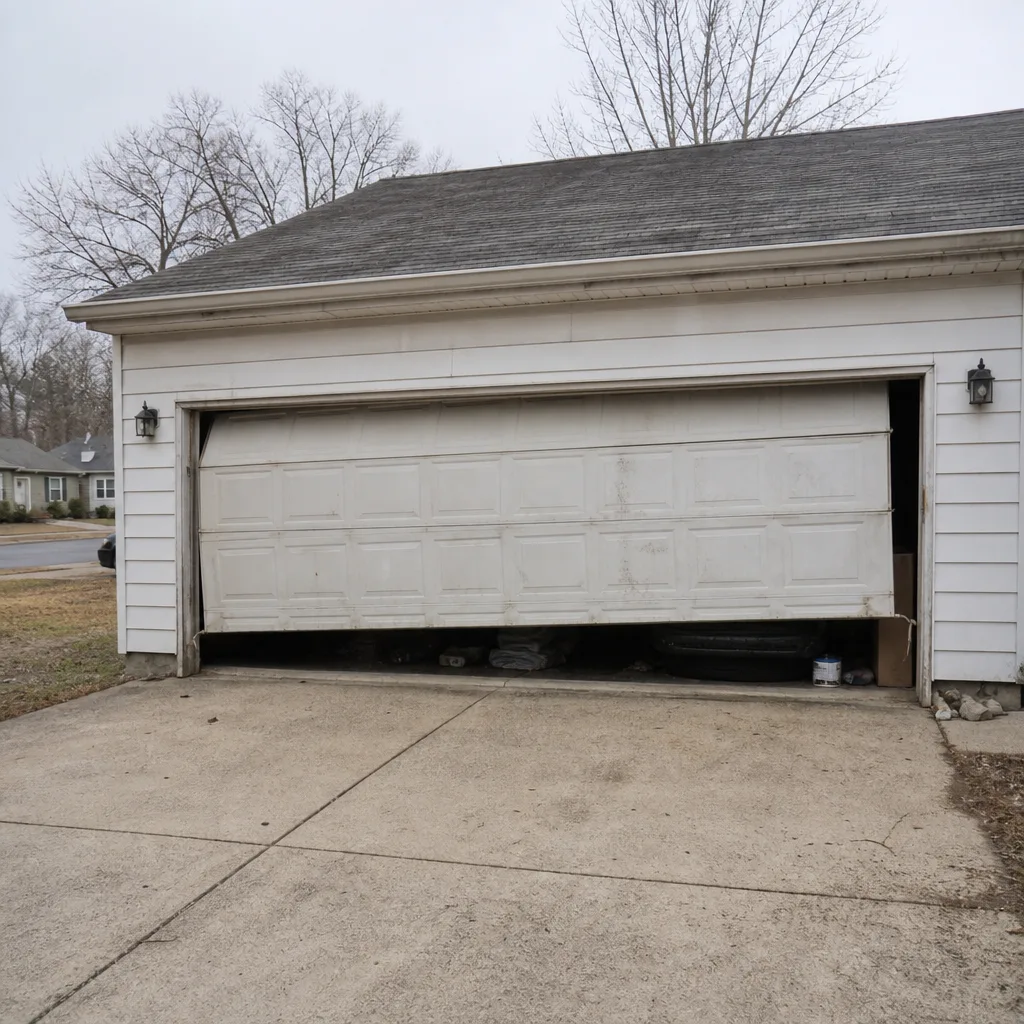
See the difference
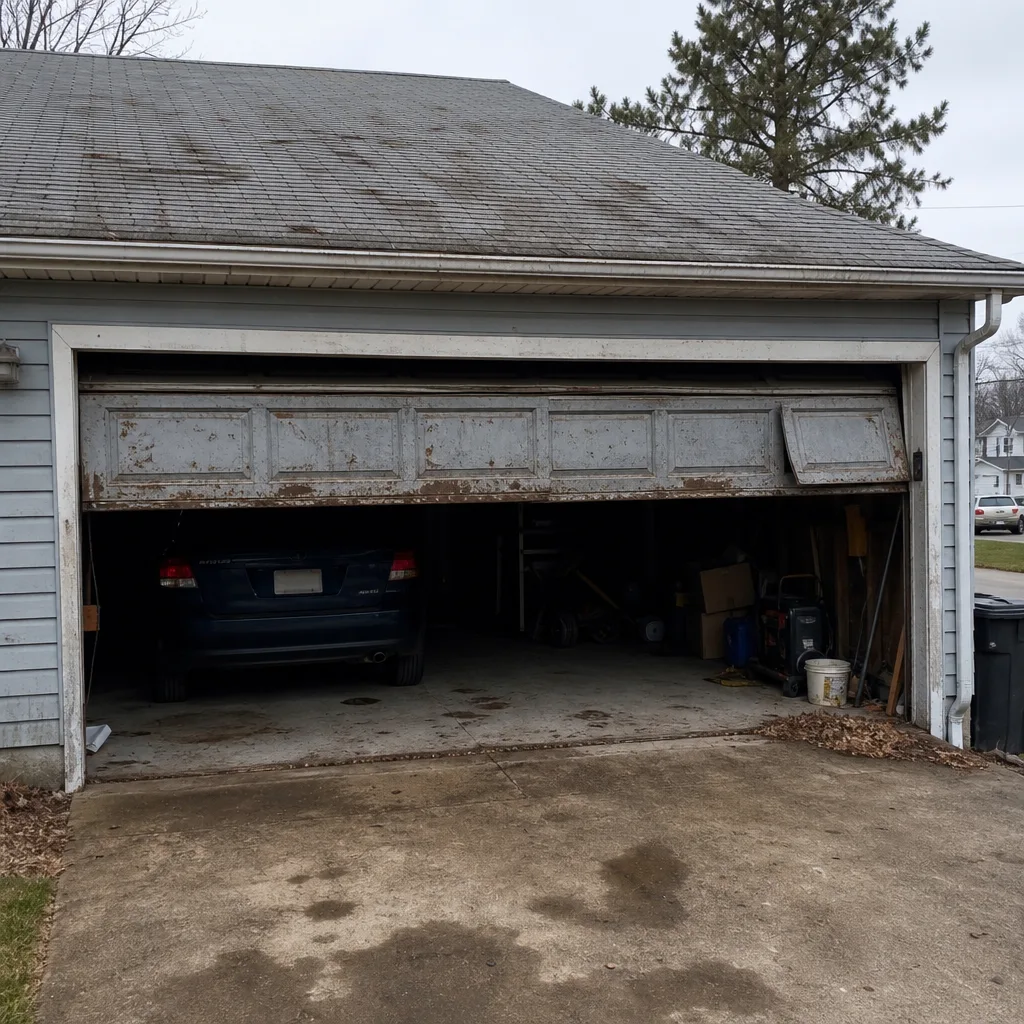 Before
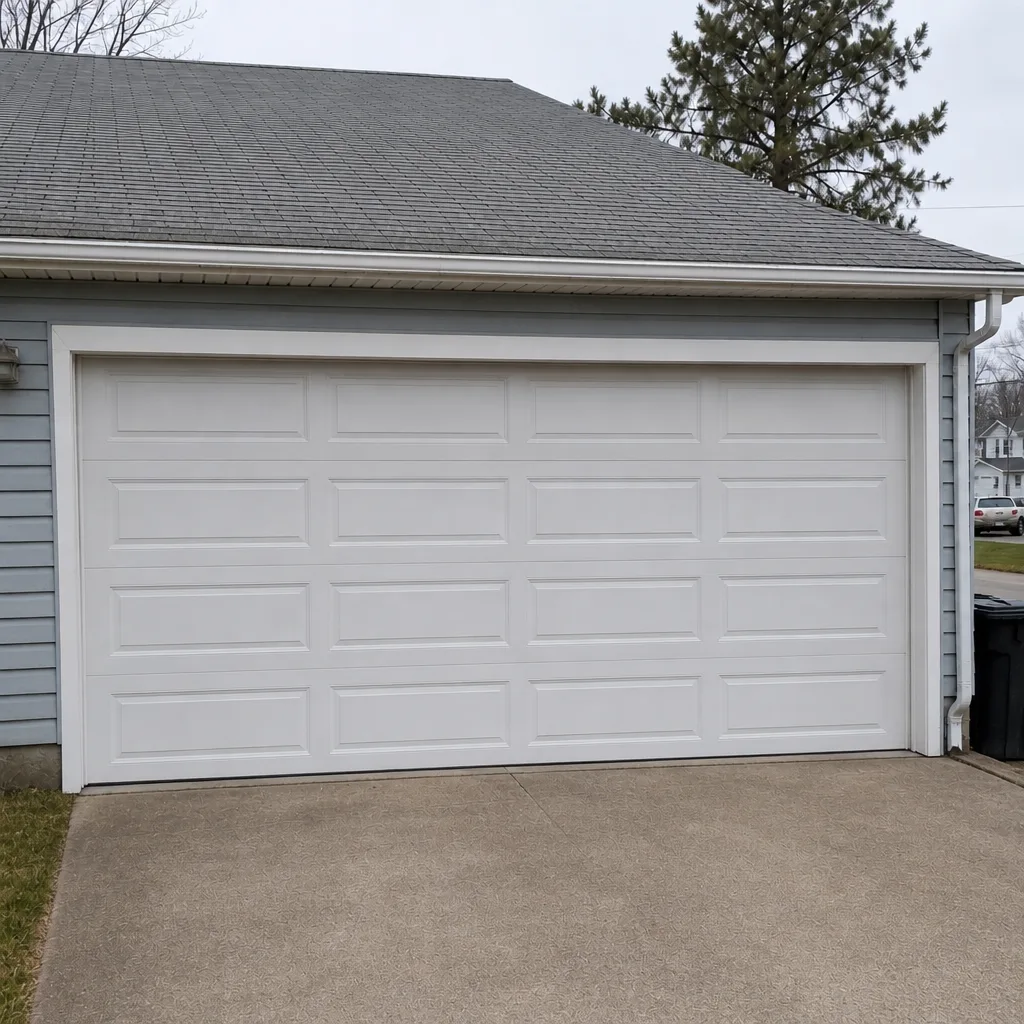 After
 Before
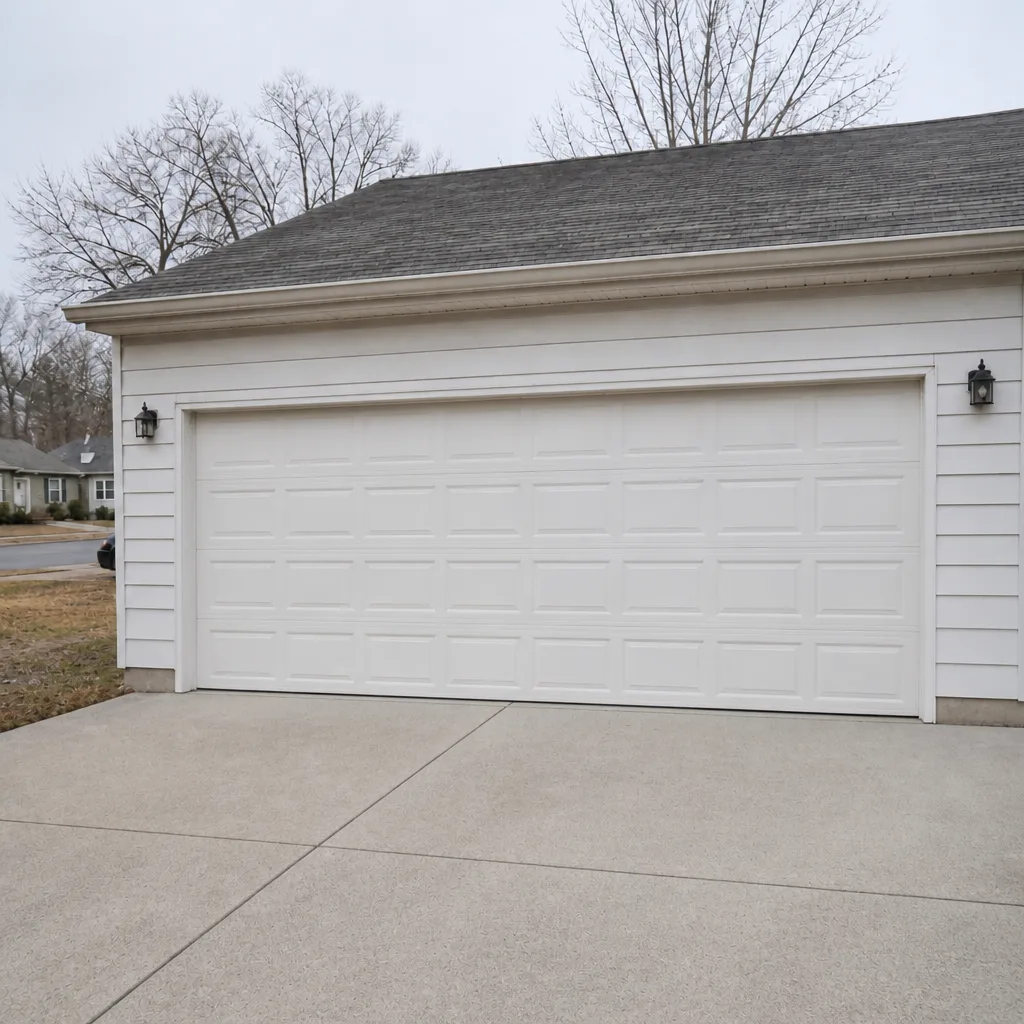 After
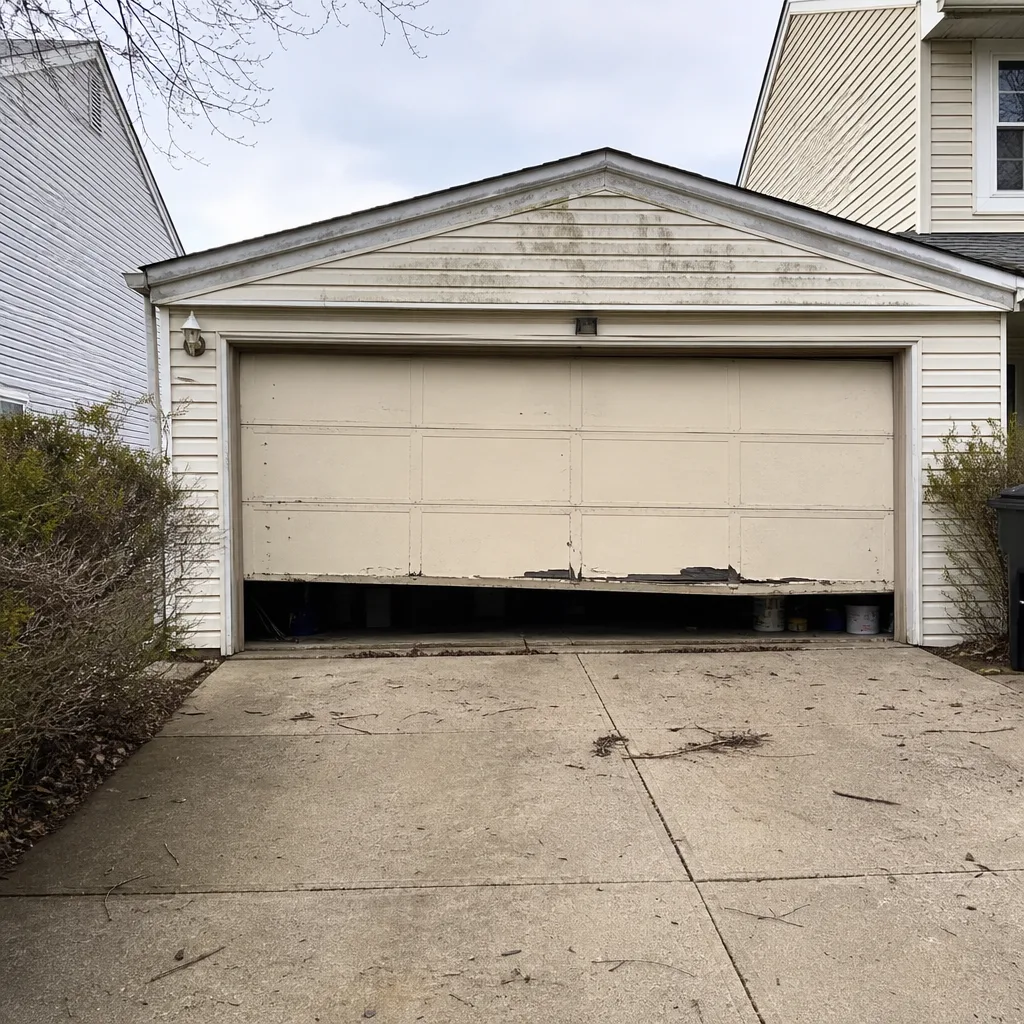 Before
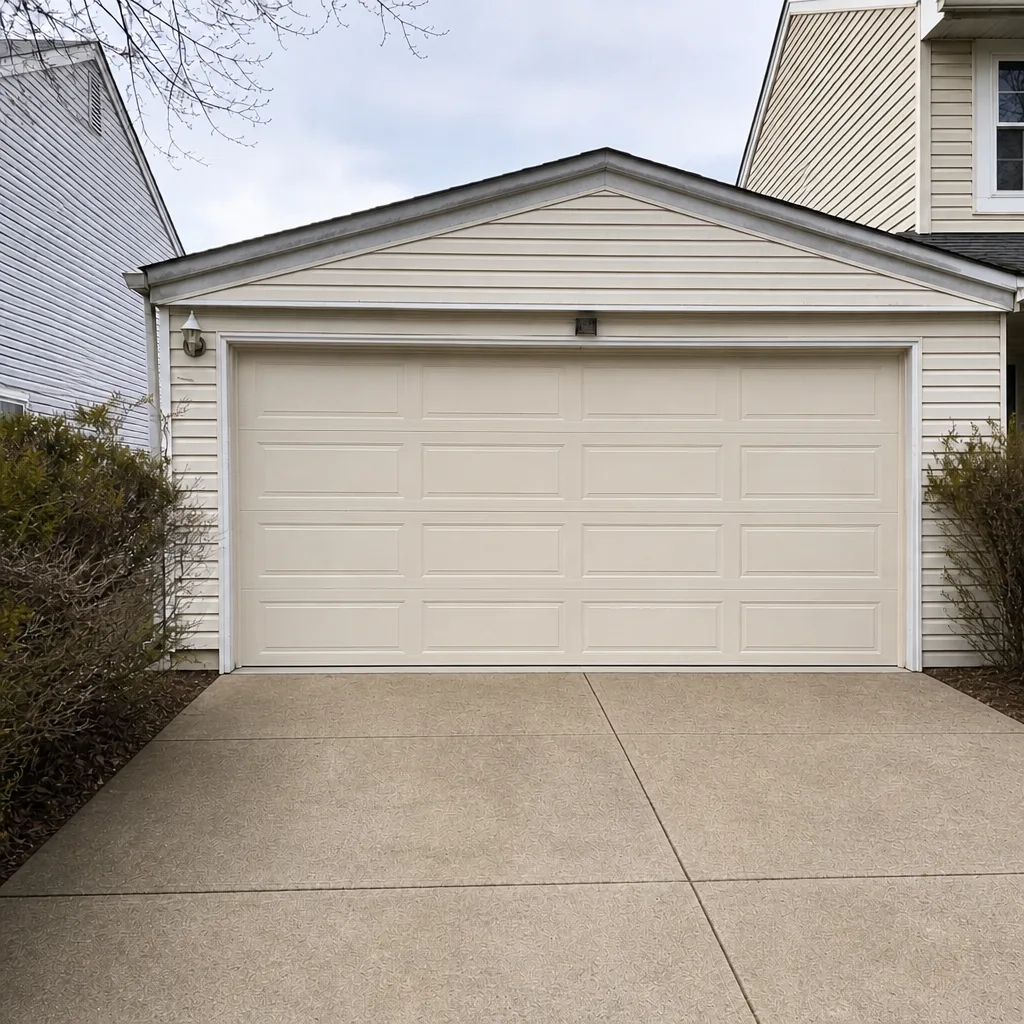 After
Common Mistakes to Avoid
- Pulling the manual release with the door partway up. The door drops the moment the carriage disconnects. Always pull with the door fully closed.
- Re-engaging the carriage while the door is moving. This is the mistake that bends a rail or snaps the opener arm. Close the door, then walk the carriage back into the engage point.
- Running the opener on a door that’s binding or has a broken spring. The motor does the damage. Stop, get it looked at, and don’t cycle the door.
- Assuming the opener is the problem when the spring is. A dead door with a buzzing motor is often a broken spring, not a dead opener. Check the spring visually before you call about the motor.
- Waiting until a storm is named to check the bottom seal. A worn seal is a small fix in calm weather and a flooded garage during a heavy rain event.
- Leaving the opener plugged in through a surge event. Power flickers trigger phantom cycles and can fry a logic board. Unplug it before the storm.
- Trying to adjust a torsion spring yourself. The stored energy in a wound spring can release without warning. This is the one part of the job that injures people who try it. Leave it to a technician.
When to Call a Professional
Call a professional if the door is stuck and won’t open or close, if you can see a gap in the torsion spring coil, if a cable is frayed or slack, if the door binds or travels unevenly, if the opener doesn’t respond after a power event, or if the door is stuck open and the garage is unsecured. In any of those situations, stop using the opener. The door is not something to force. Toms River Garage Door Repair Co offers free estimates in Toms River. We work on LiftMaster, Chamberlain, Genie, Clopay, Amarr, Wayne Dalton, Craftsman and Raynor equipment, and we handle springs, openers, cables, panels and full door replacements when a repair turns into something bigger. Call (877) 792-5709 and tell us what broke.
Frequently Asked Questions
Pull the red manual release cord hanging from the trolley carriage with the door fully closed, then lift the door by hand slowly. The carriage disconnects from the opener and the door rides on its springs. Re-engage the carriage with the door fully closed before you run the opener again. If the door is heavy when you lift it, the springs may be weak or broken, and you shouldn’t force it. Call us at (877) 792-5709 for a free estimate.
Move the cars first, close the door fully, pull the manual release so the opener is disconnected, unplug the opener, check the bottom seal, and look at the springs and cables without touching them. Secure anything stored near the tracks. That sequence prevents the most common storm failure, which is a power outage trapping the car. For the full checklist, see the section above. Call (877) 792-5709 with any questions.
We offer emergency garage door service for situations where a home is unsecured or a car is trapped. After a regional storm, Ocean County companies can run 48 hours or more behind. Call us at (877) 792-5709, describe what’s broken, and we’ll tell you honestly where you sit on the schedule. We won’t promise a response time we can’t meet, but we’ll get you booked and bring the right parts.
FEMA and NJ DEP guidance for AE zone homes is often to leave openings that can equalize pressure able to do that, so water moves in and out rather than pressing against the walls. Check with Toms River’s floodplain administrator on what applies to your specific structure. Follow any mandatory evacuation order first. Call (877) 792-5709 if you need the door or opener inspected after a flood event.
Run the post-storm inspection sequence before you cycle it on the remote: visual pass, track alignment, spring visual for coil separation, cable condition, sensor check, and then a single slow cycle with nothing in the way. A door that looks fine can bind on a bent track on the first cycle. If anything sounds off, call (877) 792-5709 for a free estimate before you use it again.
A door that reverses or refuses to close is usually a photo-eye sensor issue or a track problem. Debris from a storm can knock a sensor out of alignment, which makes the opener refuse to close the door. A bent track makes the door bind and triggers the safety reverse. Check the sensor lights first. If they’re steady and the door still won’t close, it’s likely the track or the opener logic board. Call (877) 792-5709.
The Bottom Line
Storm damage to a garage door is more often electrical and mechanical than wind-related. A power outage with a stuck car, a surge that triggers the opener, a tired spring that lets go in the night, a worn seal that lets water in. The fix for all of it is a modest pre-storm checklist and a post-storm inspection sequence, run in order and without forcing anything. Toms River homeowners who know their manual release, unplug their opener and check their seal come through storms with a working door. If yours is already showing symptoms, get it looked at before the season. Toms River Garage Door Repair Co offers free estimates in Toms River and handles springs, openers, cables and full installations. Call (877) 792-5709 for a free estimate.
Written by the team at Toms River Garage Door Repair Co.