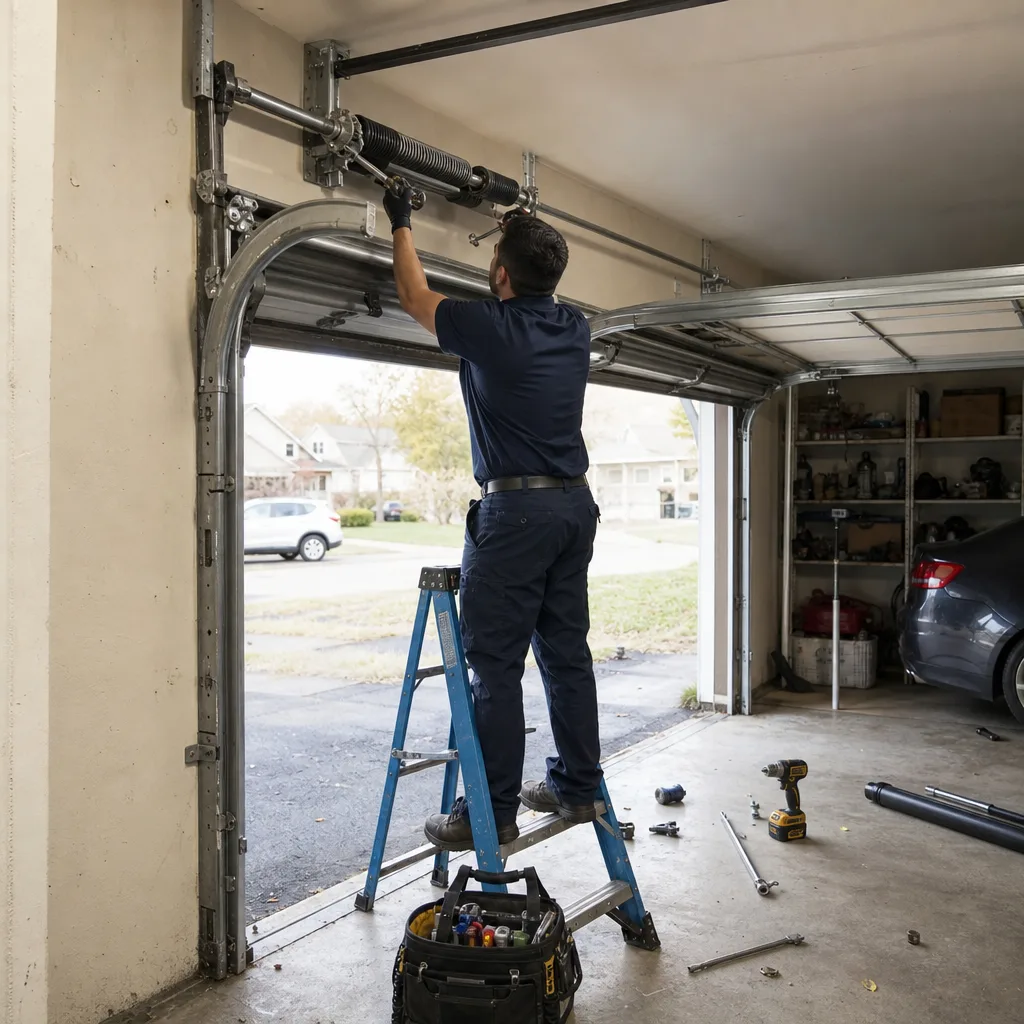
Last updated November 22, 2026
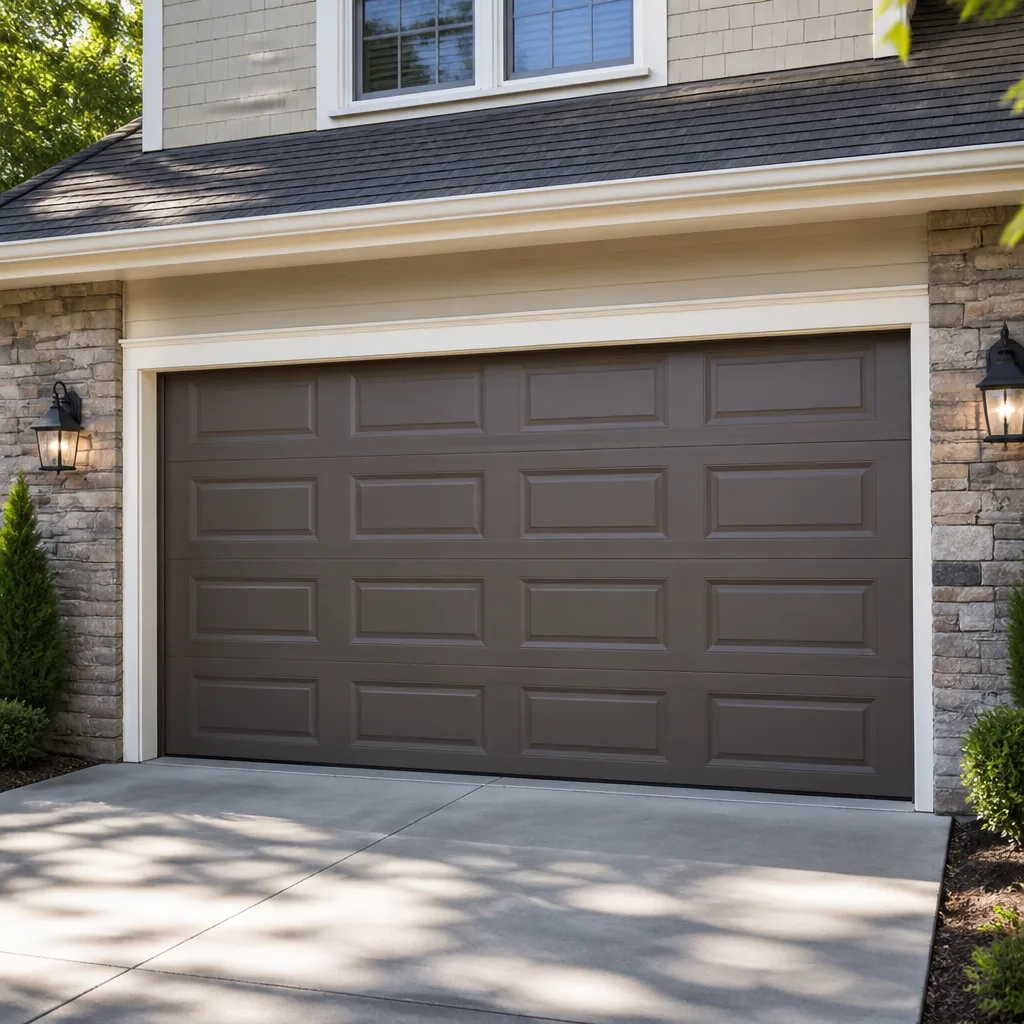 Raised-panel steel
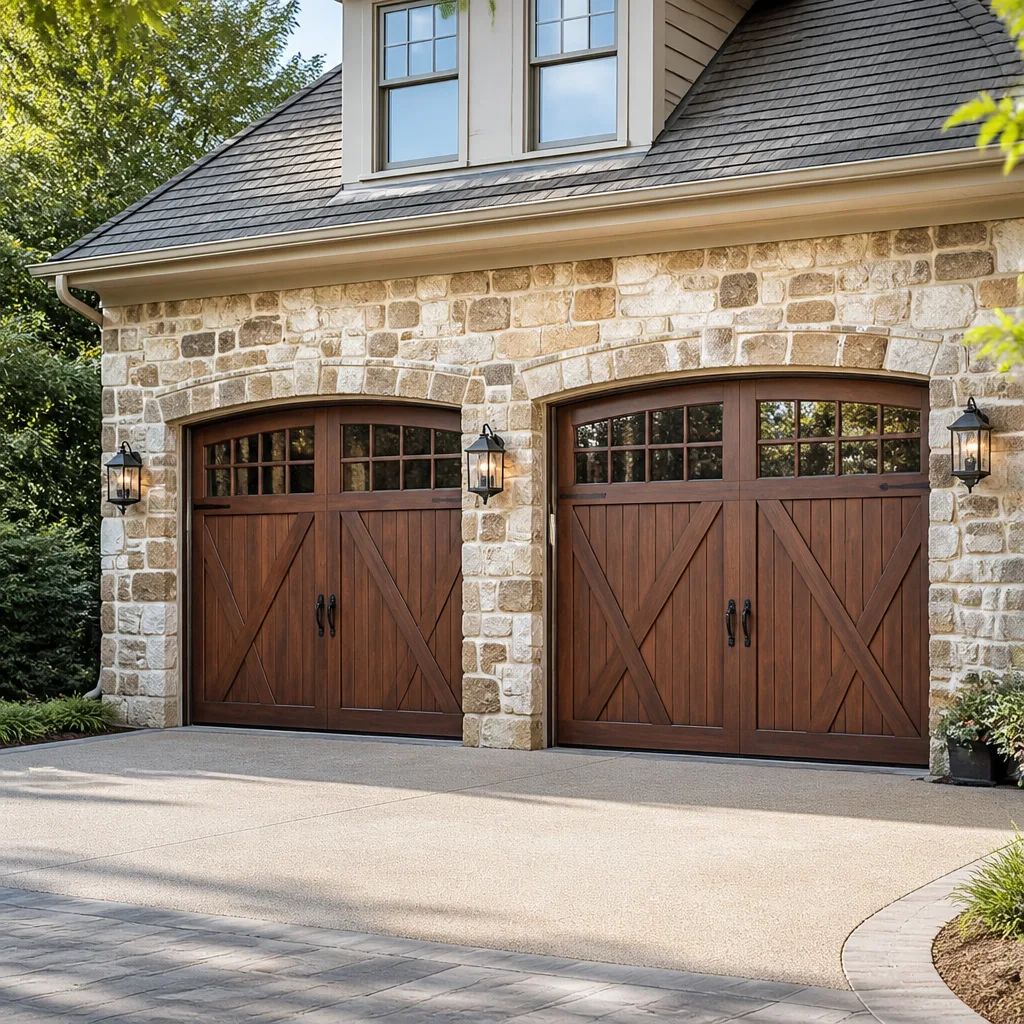 Carriage house
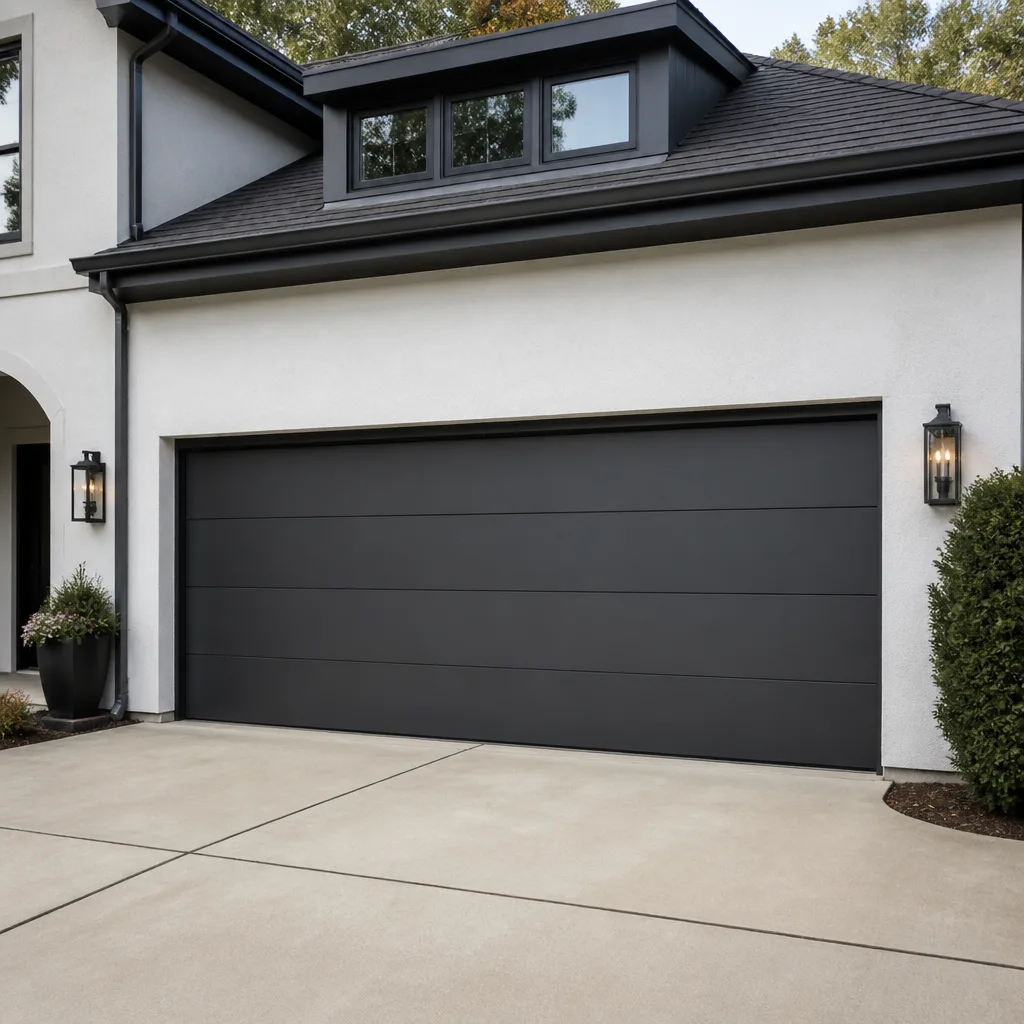 Modern flush
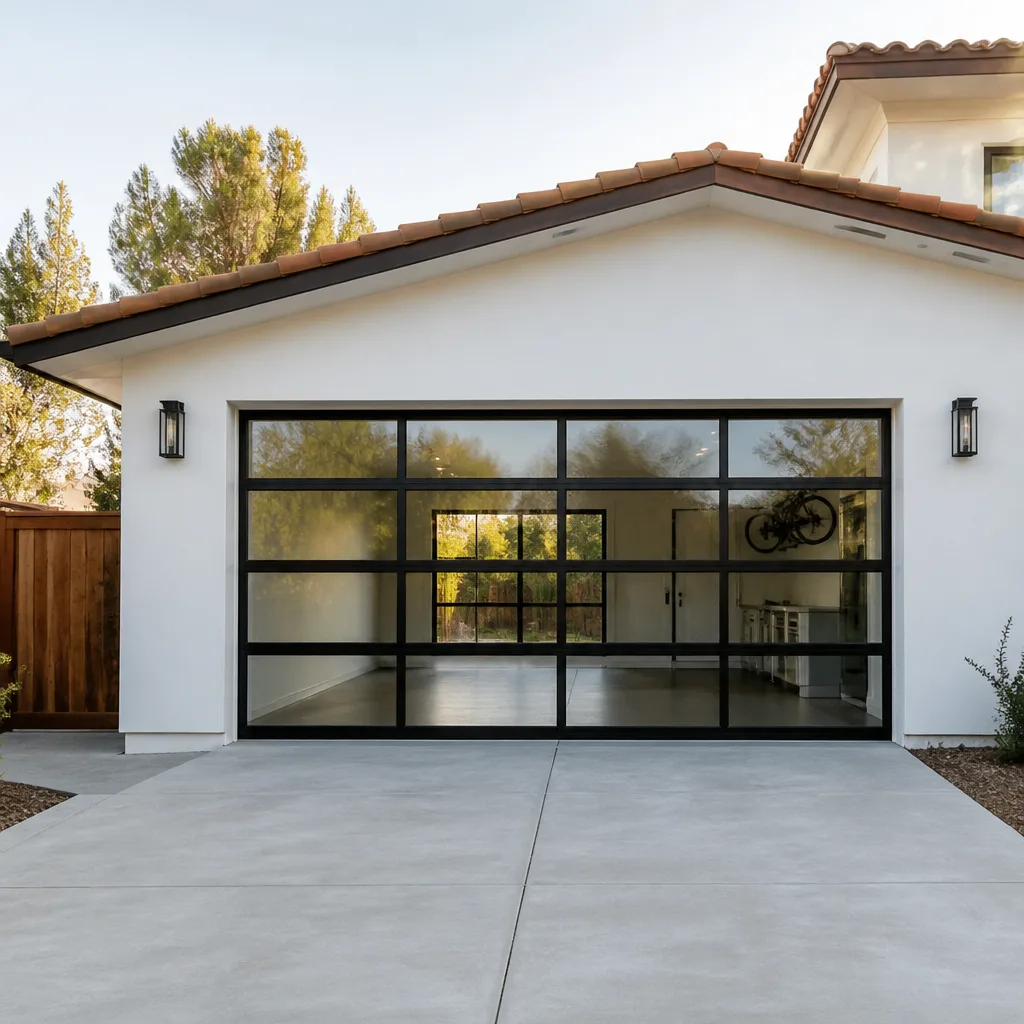 Full-view glass
 LiftMaster openers
 Chamberlain openers
Full 25-point door and opener safety check with every visit - springs, cables, rollers, tracks, and your LiftMaster or Chamberlain opener included
You get a price before we start. It does not change when the pro arrives.
Get your free estimateGarage Door Warning Signs: A Toms River Homeowner’s Reference Guide
A garage door that hesitates for half a second before it moves isn’t “getting old.” It’s telling you one of exactly three things: the opener’s force setting has drifted, a roller is starting to seize, or the spring tension is out of balance. Each has a different fix, a different cost, and a different level of urgency. Nearly every door failure gives you two to four weeks of warning before it stops working entirely, but most Toms River homeowners don’t know what they’re hearing or seeing until the door is dead in the open position. This guide turns the sounds, movements, and visual cues you’re already noticing into the exact component that’s failing.
Quick Answer
Most garage door failures announce themselves two to four weeks ahead through four channels: unusual noise (grinding, squeaking, popping, rattling), uneven or hesitant movement, visible rust or wear on springs and cables, and opener behavior like reversing or losing its travel limits. Match the symptom to its cause below, then sort the repair into one of three urgency tiers: fix this week, fix this month, or monitor. Anything involving a broken or stretched spring, a frayed cable, or a door that reverses unpredictably belongs in the “fix this week” tier and should be handled by a trained technician.
Styles & brands we work with
- Raised-panel steel
- Carriage house
- Modern flush
- Full-view glass
- LiftMaster openers
- Chamberlain openers
Table of Contents
- The Sound-to-Cause Diagnostic Chart
- Movement Warning Signs: Hesitation, Uneven Travel, and Unexpected Reversing
- What Rust on a Cable, Spring, or Track Actually Tells You
- Warning Signs Specific to Common New Jersey Garage Door Brands
- The Three-Tier Urgency Framework: Fix This Week, This Month, or Monitor
- How Toms River Weather Accelerates Wear
- The Warning Signs You Should Never Investigate Yourself
- Common Mistakes to Avoid
The Sound-to-Cause Diagnostic Chart
Sound is the most reliable early-warning system on a garage door, and it’s the one homeowners dismiss the longest. A door that has always been quiet doesn’t suddenly develop a personality. Every new noise maps to a specific component under stress. Here’s how we translate them in the field.
- Grinding – usually the opener’s drive gear or a worn trolley. On chain-drive and belt-drive units, a grinding sound coming from the ceiling mount points to stripped teeth inside the opener housing. On the door itself, it often means a roller has lost its bearing and is metal-on-metal against the track.
- Squeaking – dry hinges, dry rollers, or a torsion bar that needs lubrication. This is the least urgent of the four, but left alone it accelerates wear on every moving joint.
- Popping or a loud bang – a torsion spring that has snapped or is about to. If you hear a sharp pop followed by the door feeling impossibly heavy, stop using the door. This is the single most common spring failure signal, and it’s the one that turns into a safety issue if ignored.
- Rattling – loose hinge bolts, a track that has pulled away from the jamb, or a loose panel fastener. Rattling often appears first on the section closest to the opener rail, where vibration concentrates.
If you can identify which of the four you’re hearing, you already know roughly what a technician will be inspecting when they arrive. When the noise comes from overhead and involves the springs or cables, that’s a job for our garage door spring repair team, not a general handyman. Springs are under extreme tension and require the right winding bars and the right technique.
Movement Warning Signs: Hesitation, Uneven Travel, and Unexpected Reversing
How a door moves tells you as much as how it sounds. Watch the door through one full open-and-close cycle and you’ll usually catch the problem before it becomes a breakdown. Hesitation, in particular, is a symptom with three distinct causes, and separating them matters because they carry very different fixes and price points.
- Hesitation at the start of travel – if the door pauses for a fraction of a second before lifting, the opener’s force setting is likely too low, a roller is binding, or the spring is losing tension. A technician can usually tell which within minutes by disconnecting the opener and lifting the door by hand.
- Uneven raising (one side higher than the other) – a stretched or broken spring on one side, a worn cable, or a track out of plumb. Never ignore this. An uneven door puts twisting stress on the panels and the hinges.
- Stopping mid-travel – a logic board or travel-limit issue inside the opener, or an obstruction the safety sensors are detecting. On LiftMaster and Chamberlain units, mid-travel stops are often the first sign of a control board on its way out.
- Reversing unexpectedly – this is almost always the safety sensor system or a misaligned photo-eye. A door that reverses for no visible reason is a hazard, and it’s a fast diagnosis for our garage door opener repair technicians.
Here’s how to separate the three main culprits quickly. If the door reverses in the same spot every time, suspect the sensors. If it reverses only on the way down and feels heavy going up, suspect the spring. If it reverses randomly and the sensors look clean and aligned, suspect the opener’s force or travel limits. Each answer changes the repair.
What Rust on a Cable, Spring, or Track Actually Tells You
Rust isn’t just cosmetic on a garage door, but it doesn’t mean the same thing on every part. The location of the rust tells you what’s happening and how fast you need to act. A quick visual walkaround once a month is the cheapest maintenance there is.
- Rust on a cable – the most serious of the three. Cables carry the full weight of the door alongside the springs. Surface discoloration is one thing, but fraying, kinks, or broken strands inside a rusted cable mean the cable is near failure. Stop using the door and call a professional.
- Rust on a spring – common on torsion springs exposed to humidity, and a sign the spring is nearing the end of its life. Look for rust along the coil, especially near the winding cone. A heavily rusted spring is more likely to snap, and a snapped spring leaves the door dead weight.
- Rust on a track – usually the least urgent, but it can indicate a roller that’s binding or a track that’s collecting moisture. Clean the track, check that the rollers spin freely, and watch for new noise.
Around Toms River, the humidity swings between summer and winter are what drive most of this corrosion. Doors that face the afternoon sun or sit under dense tree cover tend to show it first. If you’re not sure which part of the assembly you’re looking at, our garage door repair technicians will walk you through it during an estimate. Our technicians have up to 14 years of experience, and translating “rusty thing” into “specific failing component” is a routine part of the job.
Warning Signs Specific to Common New Jersey Garage Door Brands
Different brands fail in different ways, and knowing the model on your door can tell you what to watch for. We service the eight most common residential brands, and a few of them have very recognizable failure patterns. Here are the ones we see most often around Ocean County.
LiftMaster openers: logic board pre-failure
LiftMaster units, common on doors across Toms River, often show logic board problems before the board dies completely. The warning signs: the opener’s remote works intermittently, the wall button needs to be held down to close the door, or the light flickers without cause. Catching it early saves you a call at the worst possible time. Our garage door opener repair team handles board diagnostics and replacement on LiftMaster, Chamberlain, and Genie systems.
Amarr panels: seal degradation
Amarr doors tend to show wear at the bottom seal before anything else. A bottom seal that’s cracked, stiff, or pulling away from the panel lets water and cold air in, which accelerates rust inside the door. In our experience, checking the bottom seal each fall prevents a lot of winter headaches in Toms River.
Clopay pinch-resistant panels: hinge wear
Clopay’s pinch-resistant panel design is a genuine safety feature, but the hinges take more load than standard hinges do. Watch for uneven gaps between panels or a hinge that flexes. A worn hinge on a pinch-resistant door shows up as a slight unevenness in the panel joints before it becomes a rattle.
Wayne Dalton and Raynor: track and roller wear
Both Wayne Dalton and Raynor doors often reveal trouble through the rollers and track rather than the opener. A Raynor door that suddenly runs louder or drifts to one side during travel usually has a track alignment issue or a worn roller. Our technicians service all eight of the industry’s leading brands, so there’s no need to hunt down a brand-specific specialist.
The Three-Tier Urgency Framework: Fix This Week, This Month, or Monitor
Not every warning sign is an emergency, and treating them all like one is expensive. Sort what you’re seeing into one of three tiers and you can prioritize without panicking. When in doubt, a free estimate settles it in a few minutes.
Fix This Week (safety-critical)
- Any door that reverses unpredictably or won’t close reliably
- A door that feels impossibly heavy when lifted by hand (likely broken spring)
- Frayed, kinked, or broken cable strands, or a door hanging at an angle
- A visibly snapped torsion spring, or a sharp pop followed by a dead door
- An opener that runs but doesn’t move the door at all
Fix This Month (functional but degrading)
- Uneven raising, or a door that hesitates at the start of travel
- Grinding or persistent squeaking from the opener or rollers
- Rust on a spring, or a bottom seal that’s cracked or pulling away
- An opener that stops mid-travel occasionally or needs multiple presses to respond
Monitor (cosmetic or early-stage)
- Surface rust on a track without binding
- Rattling from a loose hinge bolt you can check yourself
- A door that’s slightly louder than usual but moves evenly and smoothly
The framework matters most for the middle tier. A grinding opener that’s ignored for a month turns into a dead opener. The same repair done when you first hear the noise usually costs less and takes less time. Toms River Garage Door Repair Co offers free estimates on any of these, and we’ll tell you honestly which tier the problem is in.
How Toms River Weather Accelerates Wear
A garage door in Toms River has a harder working life than one in a mild climate. The humidity swings between summer and winter are the main culprit. Springs and cables contract and expand with the temperature, hinges pick up moisture, and the metal parts on the door work through thousands of expansion cycles over a few years. Doors on the inland side of Toms River that sit under dense shade tend to hold moisture longer, which speeds up rust on the bottom panel and the spring assembly.
Winter brings a second set of pressures. When the door freezes to the ground on a cold morning, the opener pulls against a stuck panel, and that strain shows up later in the opener’s force settings or the hinges closest to the bottom section. A quick check that the door lifts freely by hand each fall catches most of this before winter sets in. The same pattern plays out across the Pinelands, which is why our garage door repair team sees a wave of spring-snap calls each year when the temperature first drops hard.
The other local factor is age of housing stock. Many Toms River neighborhoods have garage doors that are twenty or thirty years old, and doors from the early 1990s are entering the window where springs, cables, and hinges all reach the end of their service life together. If your door is that age and you’re hearing any of the sounds above, it’s worth a professional inspection rather than a piecemeal fix. See our Toms River Garage Door Repair Co homepage for the full range of what we handle, or ask about a new-door estimate if the repair cost approaches replacement cost.
The Warning Signs You Should Never Investigate Yourself
Some garage door repairs are safe for a homeowner to attempt, and some are genuinely dangerous. The two most dangerous components are the torsion spring and the cables, both of which are under extreme tension and can cause serious injury if handled by someone without the training and tools to do it safely. If you see any of the following warning signs, stop using the door and call a professional.
- A snapped spring, or a loud bang followed by a door that won’t lift
- A cable that’s frayed, kinked, or visibly separated from its drum
- A door hanging at an angle, or one side that won’t move with the other
- A door that has come off its track
- Any door that feels impossibly heavy when you try to lift it by hand
We understand the temptation to try a DIY spring replacement, and the videos are out there. But the tension in a torsion spring is not something to learn by trial, and the wrong tool or the wrong winding sequence can be catastrophic. Spring repair is a named core service for us for exactly that reason. Our garage door spring repair technicians handle springs every week, and they’ll tell you what actually failed rather than upselling you into a new door.
Common Mistakes to Avoid
We’ve seen the same mistakes cost homeowners money and, in a few cases, safety. None of them are unusual; they’re just what happens when you’re dealing with a system you don’t think about until it breaks.
- Ignoring a hesitation. A door that pauses before it moves is telling you the opener’s force setting, a roller, or the spring is off. Waiting for a full failure turns a small repair into an emergency.
- Greasing a track. Tracks should be clean, not lubricated. Grease collects grit and accelerates roller wear. A few drops of lubricant on rollers and hinges, not the track, is the right approach.
- Skipping the monthly visual check. Rust on a cable or a stiff bottom seal is easy to catch in a two-minute walkaround. Most Toms River breakdowns we see had a visible sign that went unread for weeks.
- Replacing the opener when the door is the problem. If the door is heavy or binding, a new opener won’t fix it. A technician should check the door’s balance before recommending a new unit.
- Assuming age means replacement. A twenty-year-old door with good panels and a solid frame can often be repaired rather than replaced. Don’t let a technician push you into a new door if the old one is serviceable, and don’t let a repair quote approach the price of a new door without discussing it.
- Hiring a generalist handyman for a spring repair. Springs require the right tools and training. Garage doors are all we do, which is exactly the reason to keep the work with a single-trade specialist.
See the difference
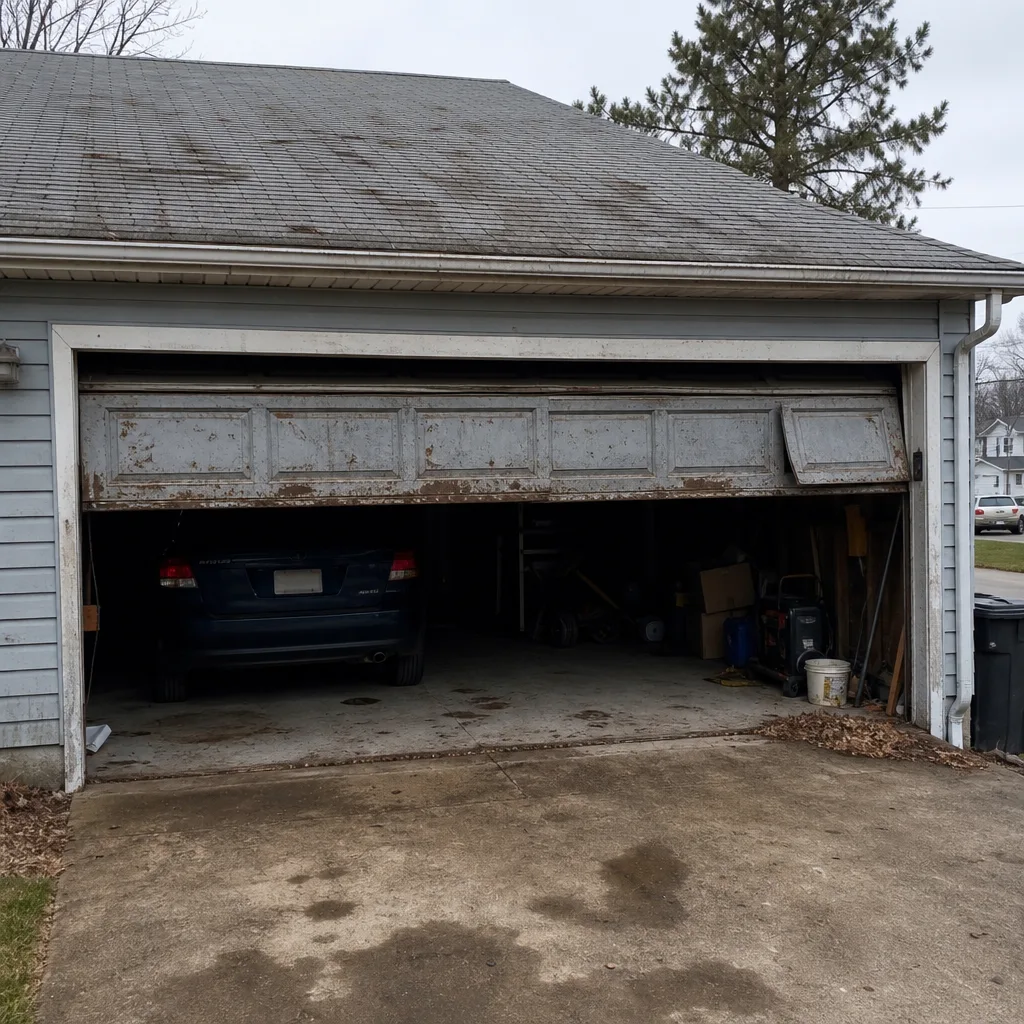 Before
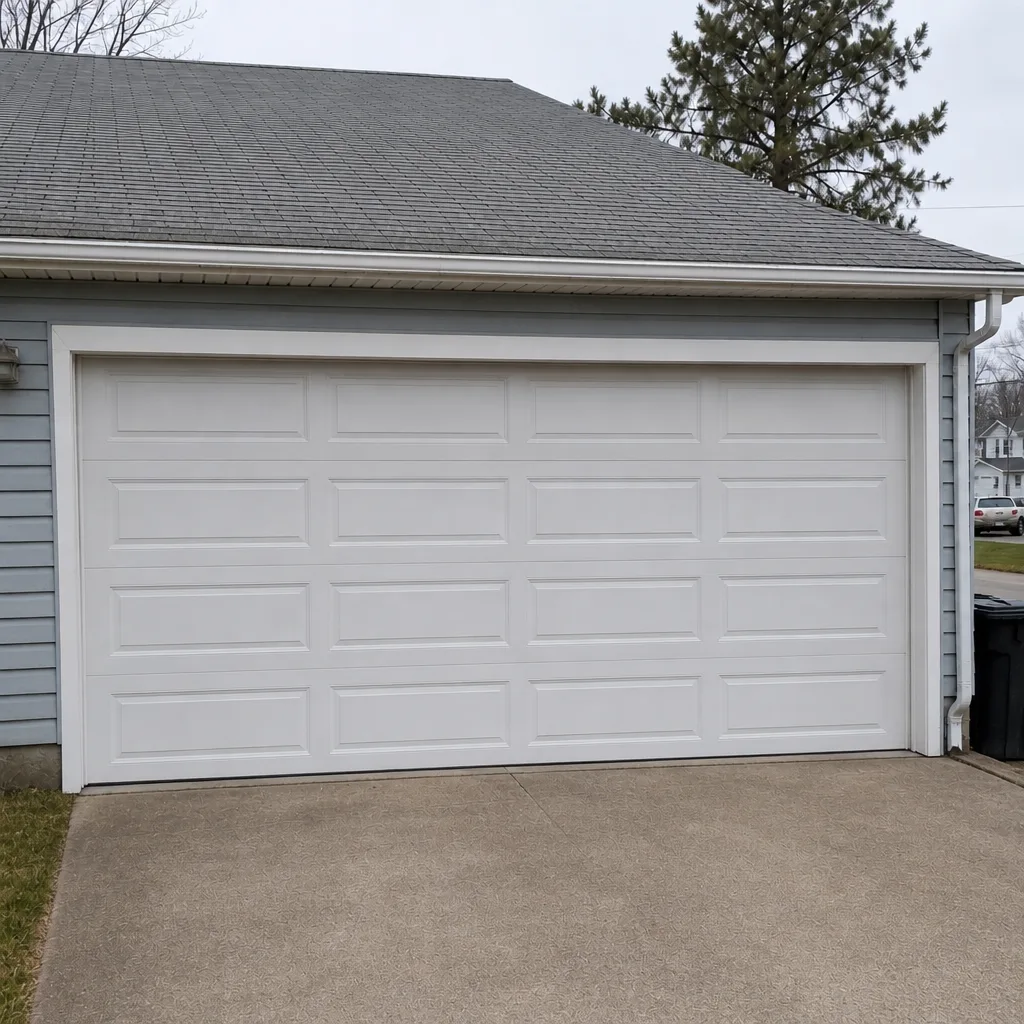 After
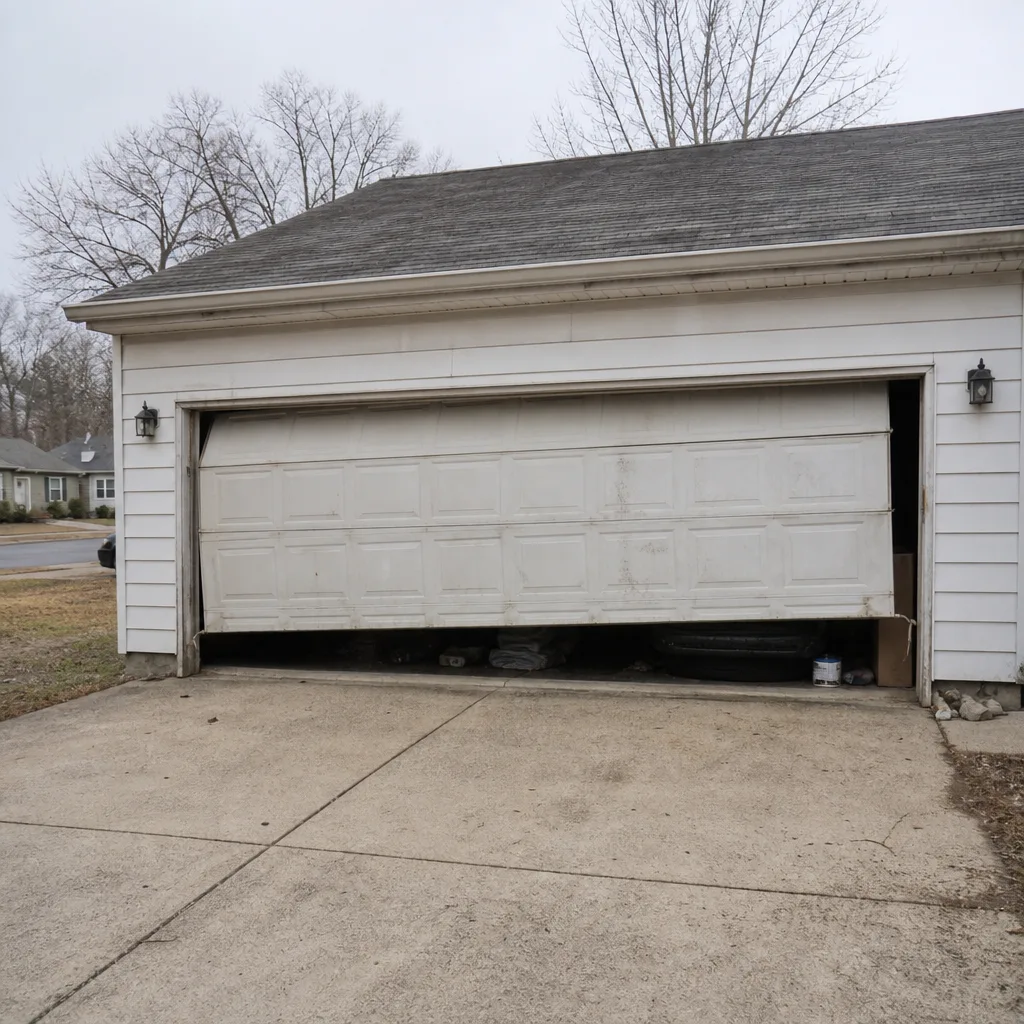 Before
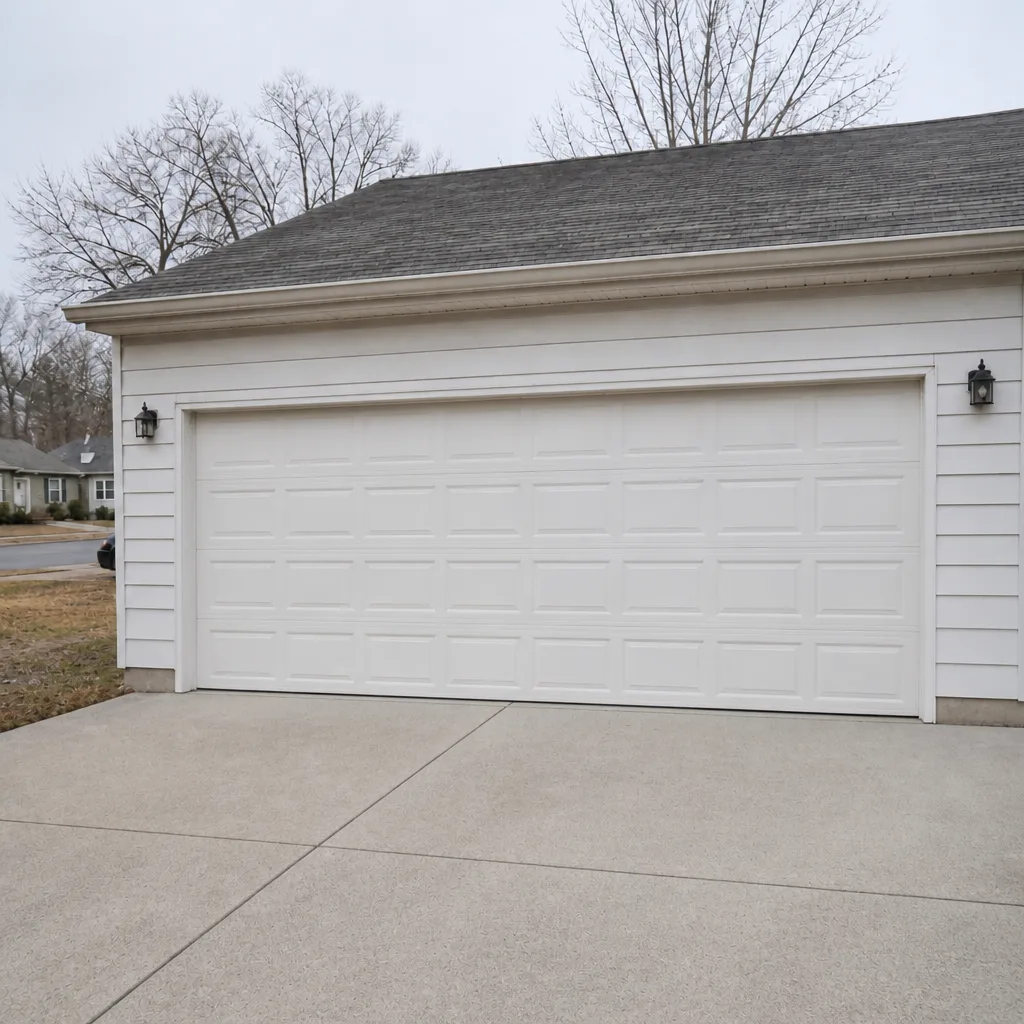 After
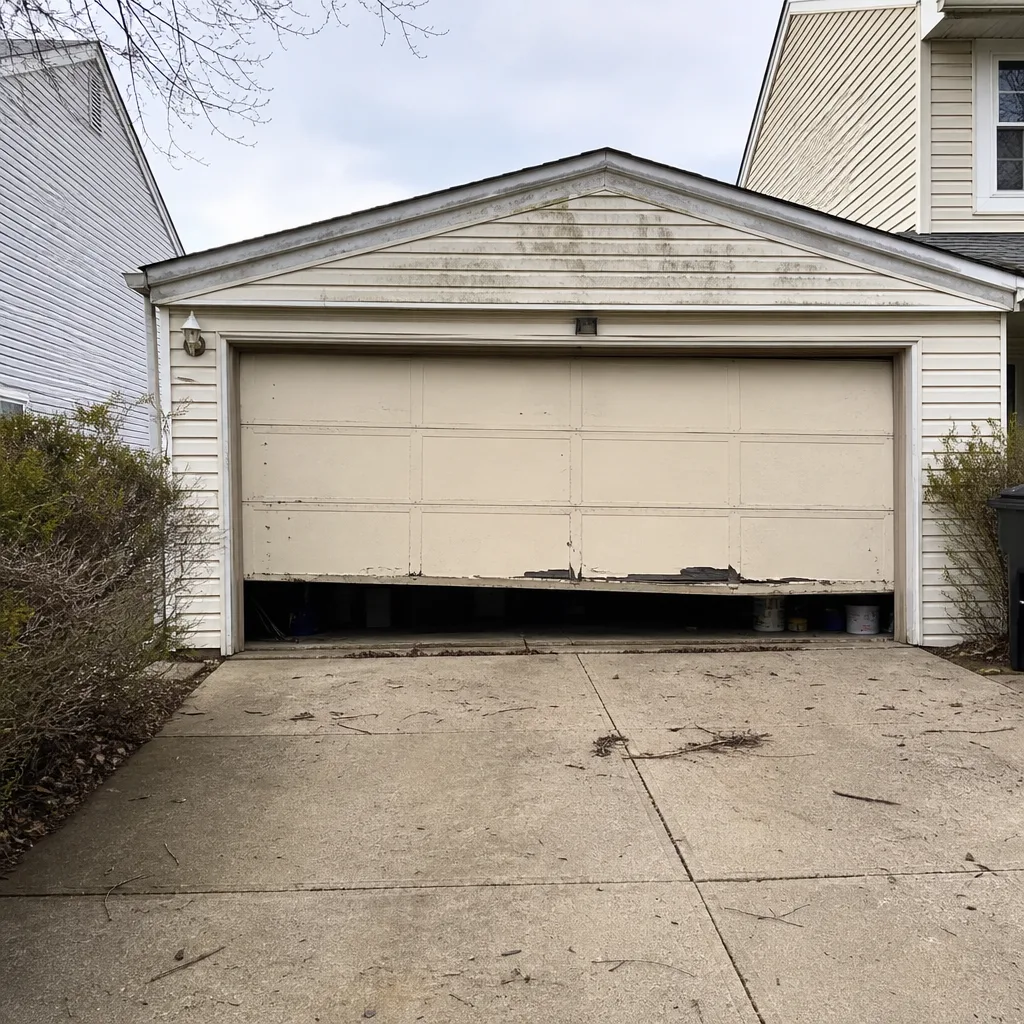 Before
 After
When to Call a Professional
Call a professional immediately if you see any of the following: a snapped spring, a frayed or broken cable, a door hanging off its track, a door that reverses unpredictably, or a door you can’t lift by hand. Those are safety issues, and using the door can make them worse. Call for a scheduled appointment if you’re hearing grinding or squeaking, seeing rust on a spring or cable, or noticing the door hesitate unevenly. Toms River Garage Door Repair Co offers free estimates in Toms River, and our technicians have up to 14 years of experience. For a door that’s failed entirely, we also offer emergency service. When your door won’t close and your home is unsecured, that’s not a tomorrow problem. Call (877) 792-5709.
Frequently Asked Questions
The earliest signs are almost always sound and movement: a new grinding, squeaking, or popping noise, or a door that hesitates for half a second before it moves. Visual signs like rust on a spring or a stiff bottom seal come later. If you notice a new sound, watch one full open-and-close cycle and check the door against the diagnostic chart above before it turns into a breakdown.
If the door feels extremely heavy when you lift it by hand (with the opener disconnected), the spring is broken. If the door lifts easily by hand but the opener won’t move it, the opener is the problem. If the door lifts but hesitates unevenly, the spring tension is likely out of balance. Any sign of a broken spring is a stop-using-the-door situation.
Typical spring repair in Toms River runs somewhere between $180 and $340 for one spring, and a matched pair is usually replaced together, so a pair roughly doubles that. The written estimate sets the final price, and we quote and agree the price before any work starts. Call (877) 792-5709 for an exact quote; estimates are free.
Yes. We offer emergency garage door service for doors that won’t close, doors that have come off track, and doors that leave a home unsecured. When your door is stuck or your car is trapped inside, call (877) 792-5709 and we’ll get a technician scheduled. For non-emergencies like a new-door installation, we schedule a free measure and a written price.
No. We quote and agree the price before any work starts, and the written estimate sets the final price. If a technician finds something extra once they’re on site, they’ll tell you and re-quote before touching it. The number we agree to is the number you pay.
The local pro we connect you with is licensed and insured as their state requires. Our technicians have up to 14 years of experience, and spring repair is a named core service for us because it’s the component that requires the most care. Call (877) 792-5709 for a free estimate on any warning sign you’ve spotted.
The Bottom Line
Every warning sign on your garage door is a message about a specific component. Grinding is a roller or opener drive. Squeaking is dry hardware. Popping is a spring. Rust on a cable is the one to act on fastest. Sort what you’re seeing into a tier and you know whether to call now or book an appointment. The signs that matter most in Toms River are the ones that appear when the seasons turn: a hesitant door in late fall, a stiff seal in early winter, a rattle in spring. Read them early, and the repair stays small.
Ready to get an exact quote? Call Toms River Garage Door Repair Co at (877) 792-5709 for a free estimate in Toms River. Whether your LiftMaster opener is grinding, your Clopay panels are showing hinge wear, or you just want a professional eye on a sound you keep hearing, we’ll tell you what’s wrong and give you a written price before any work starts.
Written by the team at Toms River Garage Door Repair Co.